
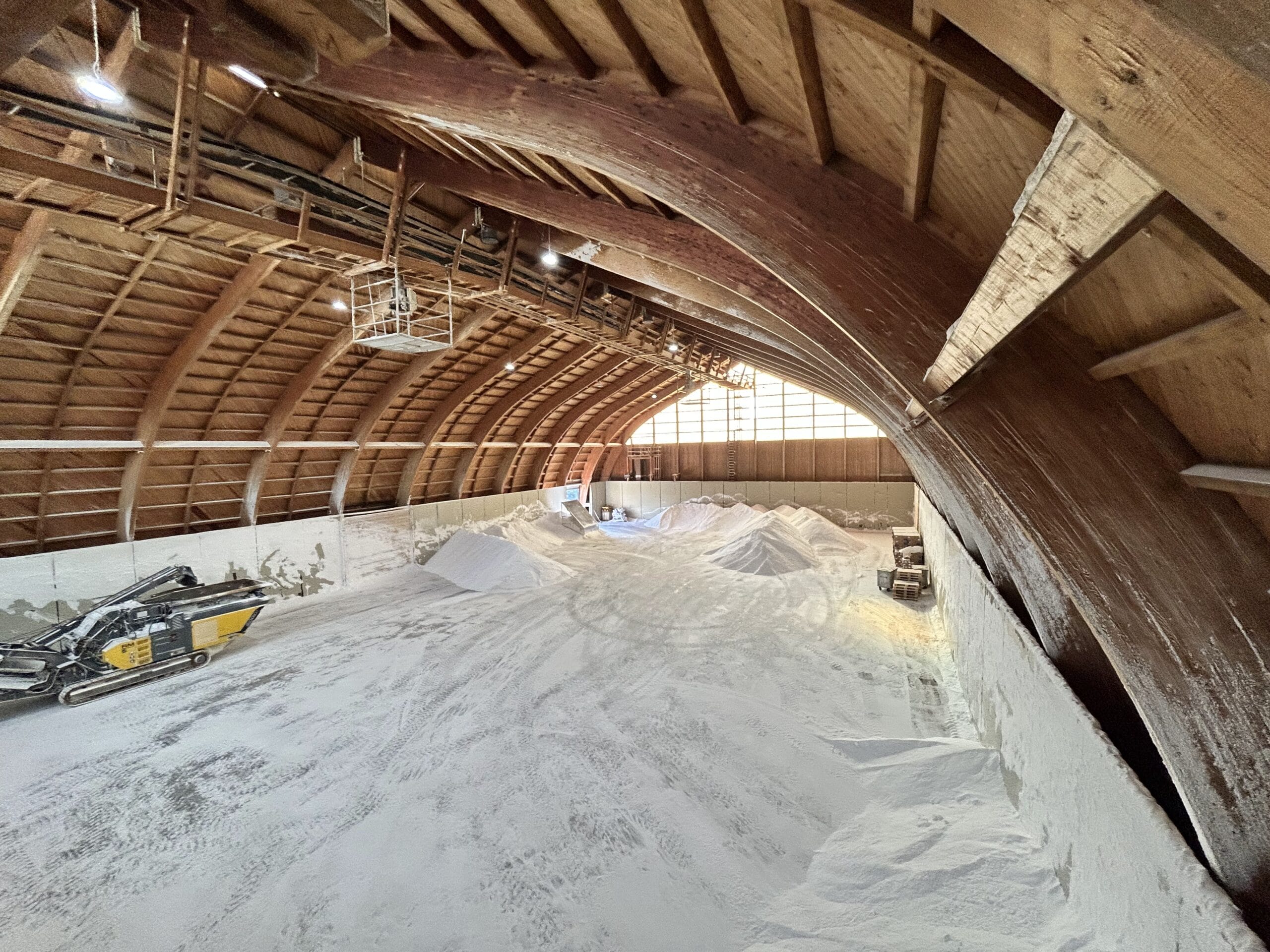
The visit to the Saline AG on 21st January began with an engaging video tracing the history of salt—from its origins over 13.8 billion years ago to modern-day production in Pratteln. The video set the stage for understanding just how essential salt has been, and continues to be, for human life and civilisation.
We learned that humans require approximately 5–6 grams of salt per day to survive. In ancient times, this need was met mainly through meat consumption. Salt was once so valuable that it was known as “white gold” and was even used as a form of payment. Most famously, Roman soldiers were paid in salt.
Around 1836, land salt was discovered approximately 135 meters underground in Muttenz. Today, salt is processed using three primary methods:
- Water extraction (“cooking”) – the method used in Pratteln. Water and nitrogen are injected into underground caverns to dissolve the salt, creating brine with about 30% salt content. The brine is filtered to remove all minerals except sodium chloride, then sent to evaporators. Iodine and fluoride are added for health reasons (to prevent goitres and support dental health), along with anti-caking agents. The salt warehouse is constructed from wood, as salt does not react with it, a practical design choice. 600,000 tons of salt are produced per year.
- Mining
- Seawater evaporation
Saline AG employs approximately 280 people and is the only salt producer in Switzerland, jointly owned by all 26 cantons, reflecting the country’s reliance on salt. Swiss salt is not exported, except for a minimal quantity of special salt sent to the United States.
We also learned that wellness salts are produced exclusively in Bex.
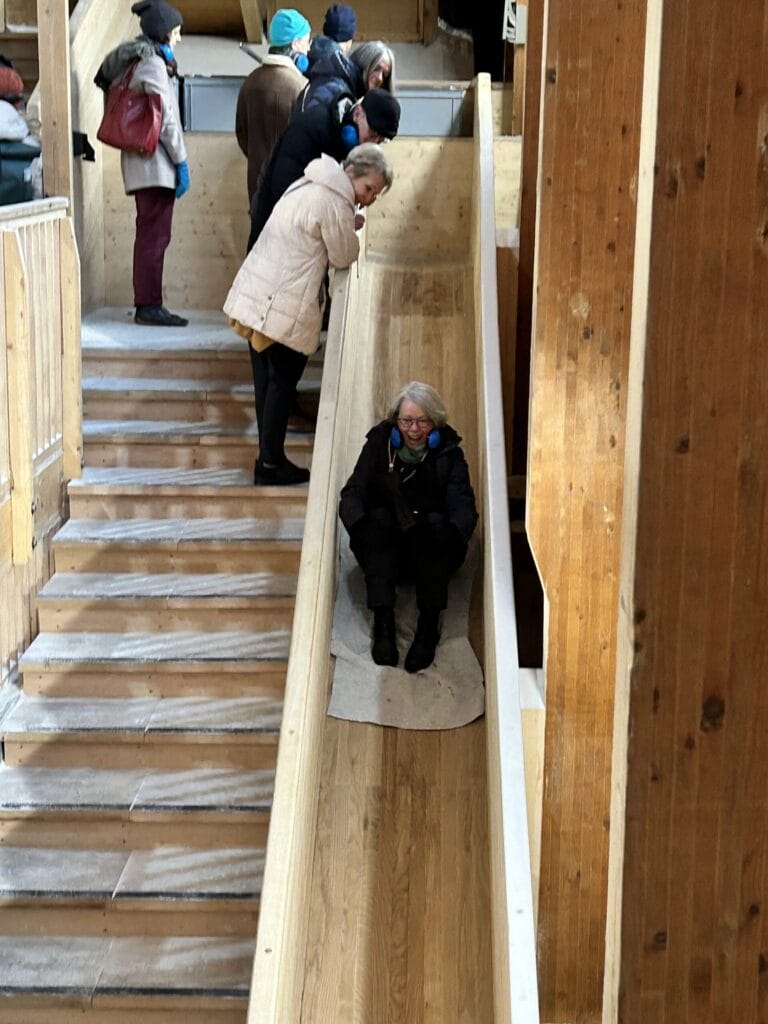
Overall, the tour offered valuable insight into the historical, scientific, and economic importance of salt in Switzerland, with the bonus of tasting and sliding fun. Unfortunately, we couldn’t see the famous salt mountain in the warehouse, since most of the salt had already been used on Switzerland’s winter roads.
We all greatly appreciated our guide, Tim, whose extensive knowledge and great sense of humour made the experience even more enjoyable.
Feedback from participants
Several of the participants told us their favourite part of the tour:
- Tracy Meffen: “the architecture of the salt warehouse structure”.
- Diane Leibinger: “the chip/crisp tasting and of course, the SLIDE”.
- Anita Breland: “he overall tasting experience was unexpected”.
- Tom Fakler: “the SLIDE!”.
- John Baker: “the NO salt mountain, and the SLIDE”.
- Hassanah Simpson Schwab: “just hanging out, and the SLIDE”.
- Julie Woan: “salt and crisps, the overall interactive nature of the tour”.
- Roxanne Baxter: “Tim, our guide, was GOOD! The SLIDE and experiments”.
- Doris Miesch: “different kinds of salt”.
- Doug Hill: “the production process”.
Text and pictures: Doreen Parrish